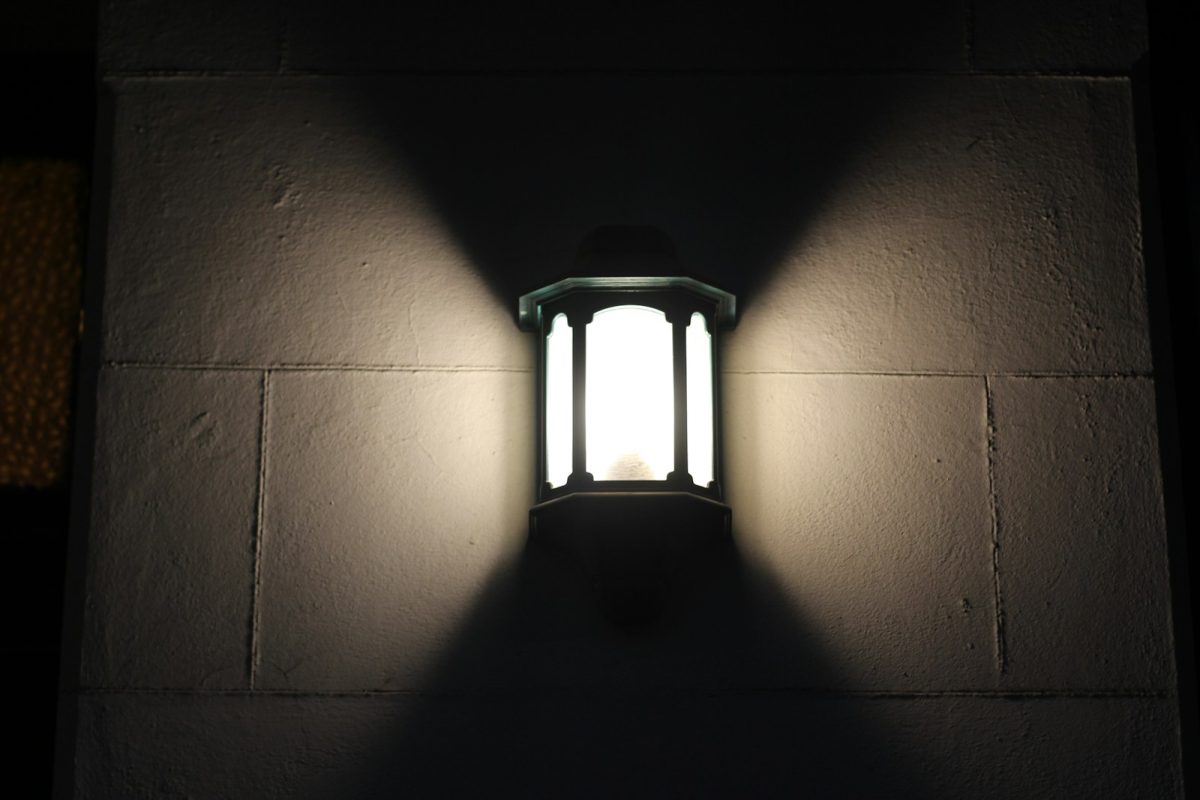
How many lumens do you actually need in a small living room?
Find out the exact total lumens needed for a small living room, how to divide them across lamps, and how to avoid glaring over-lit spaces.

In this article
- Key takeaways
- How do you calculate total lumens for your room size?
- Lumens by living room task: How to split the count
- How does bulb color change how bright lumens feel?
- How do you arrange lights if your living room is long or narrow?
- What is the honest trade-off with low-lumen setups?
- Common lumen mistakes in small spaces
- Suggested setups for a 120-square-foot room
A small living room between 100 and 150 square feet requires 1,500 to 3,000 total lumens. The exact target comes from the standard baseline of 10 to 20 lumens per square foot for everyday relaxation and casual television watching.
If you put all of that brightness into a single bare ceiling bulb, your space will look like an interrogation box. Dividing those lumens among two or three separated light sources softens the shadows, hides wall imperfections, and gives you actual control over the mood.
Key takeaways
- Small living rooms need 10 to 20 lumens per square foot for ambient light, plus an extra 300 to 500 lumens targeted at reading spots.
- A single ceiling fixture should rarely exceed 800 to 1,100 lumens in spaces under 150 square feet.
- Never use a single high-lumen bulb to compensate for poor wiring; spread your light across three separate points.
- Choosing the wrong color temperature can ruin your lumen calculations. Cooler color temperatures feel perceptually brighter and can make a compact flat feel stark.
How do you calculate total lumens for your room size?
The basic formula is room width multiplied by room length to get total square footage, multiplied by your desired foot-candles. Lighting pros use foot-candles to describe the light landing on a surface, where one foot-candle equals one lumen per square foot. According to guidelines maintained by the Illuminating Engineering Society, residential living rooms function best at 10 to 20 foot-candles.
Here is the straightforward math for common compact room dimensions:
- 8 x 10 feet (80 sq ft): 800 to 1,600 total lumens
- 10 x 10 feet (100 sq ft): 1,000 to 2,000 total lumens
- 10 x 12 feet (120 sq ft): 1,200 to 2,400 total lumens
- 12 x 12 feet (144 sq ft): 1,440 to 2,880 total lumens
The lower end of the range is ideal if you spend your evenings streaming films and unwinding. The upper end suits multipurpose rooms where you work from a coffee table, host friends, or fold laundry.
Lumens by living room task: How to split the count
Putting 2,000 lumens in one central overhead pendant is the most common mistake renters make. The light hits the top of your head, throws deep eye sockets into your face, and leaves the perimeter corners dark.
Instead, divide your total output across three distinct layers:
| Layer | Recommended Lumens per Fixture | Purpose | Best Fixture Type |
|---|---|---|---|
| Ambient | 600 – 1,100 lumens | General room glow | Semi-flush ceiling light, diffused paper pendant, or torchiere floor lamp |
| Task | 300 – 500 lumens | Direct reading, paperwork, hobbies | Adjustable swing-arm floor lamp or focused table lamp |
| Accent | 150 – 300 lumens | Depth, wall texture, focal points | Plug-in sconces, LED bookshelf pucks, or sideboard lamps |
If your room measures 120 square feet, your target is roughly 1,800 total lumens. You can easily achieve this balance with:
- One 800-lumen overhead fixture fitted with a milky diffuser or shade.
- One 450-lumen floor lamp angled toward your sofa arm for reading.
- Two 250-lumen table lamps or small accent lights set on a credenza or low shelving unit.
If you cannot add hardwired wall fixtures because of your lease, read our guide on how to mount plug-in wall sconces with command strips to place accent lighting exactly where your floor space is tightest.
How does bulb color change how bright lumens feel?
Color temperature dictates how our eyes interpret raw lumen output. You can buy two bulbs rated at an identical 800 lumens, but a 4000K cool white bulb will feel visually aggressive, while a 2700K warm white bulb feels gentle.
The Energy Star lighting guidance notes that 2700K produces the warm glow familiar from traditional incandescent lights, while 3000K provides a slightly crisper, cleaner white. In compact living rooms, warm white tones are universally more forgiving because they reflect softer amber wavelengths off drywall.
However, paint color matters. If your rental living room has pale grey walls or cool undertones, standard warm white bulbs can sometimes cast an unflattering mud tone across the walls. Check out our deep dive into why 2700K looks orange in some small rooms to see whether a 3000K bulb would better suit your wall palette without altering your lumen calculations.
How do you arrange lights if your living room is long or narrow?
Long layouts distort light distribution. If you put 2,000 lumens at one end of a 9x16 foot living room, the middle and far end will feel murky.
To solve this, place your light sources in a triangle pattern. Set one ambient floor lamp in the corner furthest from the window, place a small table lamp near the middle seating area, and place your reading lamp directly beside the primary chair. If your seating area shares square footage with your sleeping or dining space, see our blueprint on where you should actually place lamps in a long studio for specific layout diagrams.
If your small living room opens straight into an unlit hall, consider battery-powered pucks or smart puck lights to transition between zones smoothly. You can see practical battery alternatives in our post on how to light a dark entryway without an outlet nearby.
What is the honest trade-off with low-lumen setups?
The catch with designing a living room around the ideal 10 to 15 lumens per square foot is cleaning day.
Warm, layered, 1,500-lumen setups look relaxing at night, but they actively hide dust, dropped items, and pet hair on the rug. If you only install moody accent lamps, finding a lost charging cable or vacuuming behind the sofa turns into a chore.
The practical solution is smart bulbs or dimmable LED ceiling bulbs. A ceiling fixture that can ramp up to 1,600 lumens on demand allows you to clean or unpack boxes easily, but can be dialed down to 300 lumens when you are watching television.
Common lumen mistakes in small spaces
1. Buying bulbs by watts instead of lumens Wattage only measures energy usage, not visible brightness. A modern LED bulb draws just 8 to 10 watts to produce 800 lumens, while an older incandescent bulb drew 60 watts for that exact same light output. Always look directly at the lumens spec printed on the package.
2. Pointing light straight down Exposed downward bulbs cause severe glare on laptop screens and television panels. In small rooms, bounce your light off surfaces instead. An uplight floor lamp that washes light against a white ceiling will make a small living room appear physically taller and more open than any downward can light.
3. Ignoring shade density A dense black fabric lampshade can swallow up to 50 percent of a bulb's total lumen output. If you install an 800-lumen bulb inside a dark, opaque drum shade, you are realistically only getting roughly 400 useful lumens out into the room. Use linen, parchment, or frosted glass shades if you want your calculated lumens to actually illuminate the space.
Suggested setups for a 120-square-foot room
If you want a plug-and-play recipe that does not require calculations, here are two setups that hit the optimal 1,800 to 2,000 lumen sweet spot.
Setup A: The Renter's Plug-In Trio (No ceiling wiring needed)
- One tall upward-facing torchiere floor lamp in the rear corner: 1,100 lumens (2700K warm white)
- One table lamp on a side table or credenza: 450 lumens (2700K)
- One focused reading lamp next to your sofa: 350 lumens (3000K for sharper reading clarity)
- Total output: 1,900 lumens
Setup B: The Overhead & Sconce Pair
- One semi-flush ceiling fixture with frosted glass: 800 lumens (dimmable LED)
- Two plug-in wall sconces flanking the sofa: 450 lumens each (warm white)
- One low-level accent light on a TV console: 200 lumens
- Total output: 1,900 lumens
Keep the total count within this boundary, spread the bulbs out across different heights, and your small living room will feel open without feeling exposed. If you need dedicated reading bulbs for other parts of the home, read our guide on what bulb wattage works best for a bedside reading lamp to keep your eye strain down across every room.
Frequently asked questions
How many lumens do I need for a 10x10 small living room?
Is 800 lumens enough for a living room?
Can you have too many lumens in a small room?
How do lumens relate to foot-candles?
Sources and further reading
- Illuminating Engineering Society ies.org